The classic first attempt: $120 at the grocery store, four hours on a Sunday roasting twelve chicken breasts and boiling four cups of rice, fifteen identical containers lined up in the fridge like a trophy. By Wednesday, lunch is a chore. By Friday, five containers are in the trash and takeout has been ordered two nights running. That single Sunday costs around $60 between wasted food and delivery fees.
Meal prep is one of the most powerful tools for weight loss — but only when it's done right. Done wrong, it wastes money, kills your motivation, and can genuinely make you sick. The difference between a routine that sticks and one that collapses is almost entirely about avoiding the mistakes below.
These are the 10 most common meal prep mistakes, ranked roughly by how much they cost. The most expensive is the food-safety one — a single spoiled batch can throw out $40 of chicken and knock you off track for days. If you've struggled to make meal prep stick, chances are at least three of these are in play.
The Three Most Expensive Mistakes
| The mistake | Typical cost | The fix |
|---|---|---|
| Prepping 20 meals at once (#1) | ~$40 in trashed food + takeout | Prep 6-8 meals, mini-prep Wednesday |
| Sealing hot food (#3) | A spoiled batch by Tuesday | Ice-bath cool ~25 min, then seal |
| Not labeling containers (#6) | Thursday's mystery-box guessing game | Painter's tape: name + made + eat-by |
Table of Contents
- Mistake #1: Prepping Too Much Food at Once
- Mistake #2: Not Portioning After Cooking
- Mistake #3: Ignoring Food Safety Rules
- Mistake #4: Eating the Exact Same Meal Every Day
- Mistake #5: Skipping Vegetables Because They "Don't Reheat Well"
- Mistake #6: Not Labeling or Dating Containers
- Mistake #7: Under-Seasoning Your Food
- Mistake #8: Prepping Without a Plan
- Mistake #9: Using the Wrong Containers
- Mistake #10: Trying to Make Everything From Scratch
Mistake #1: Prepping Too Much Food at Once
The Mistake
You spend your entire Sunday roasting 12 chicken breasts, boiling 4 cups of rice, and chopping vegetables until your cutting board begs for mercy. You pack 15 identical containers — enough for every lunch and dinner through Friday. The fridge looks like a meal prep influencer's Instagram post. You feel unstoppable.
What It Costs You
This is the classic first-week pattern. Rice dries out by Monday, chicken gets that leftover texture by Tuesday, and by Wednesday the identical bowl feels defeating. Thursday's lunch is pushing day 4 of the safety window; Friday's container goes in the trash — about $8 of groceries gone. Worse, Sundays start getting dreaded. One skipped Sunday turns into two, and suddenly you're back on takeout.
The Fix
Prep for 3-4 days, not 7. Cook 6-8 meals at a time — enough for Monday through Thursday. On Wednesday evening, do a quick 30-minute mini-prep to cover Friday through the weekend. This keeps food fresher, tastes better, and prevents the Sunday dread that kills meal prep habits. It's the single highest-leverage change on this list.
If you absolutely must prep for a full week, freeze half immediately. Meals for days 1-3 go in the fridge. Meals for days 4-6 go in the freezer. Pull them out the night before to thaw. Frozen meals stay safe and taste fresh for up to 3 months.
Mistake #2: Not Portioning After Cooking
The Mistake
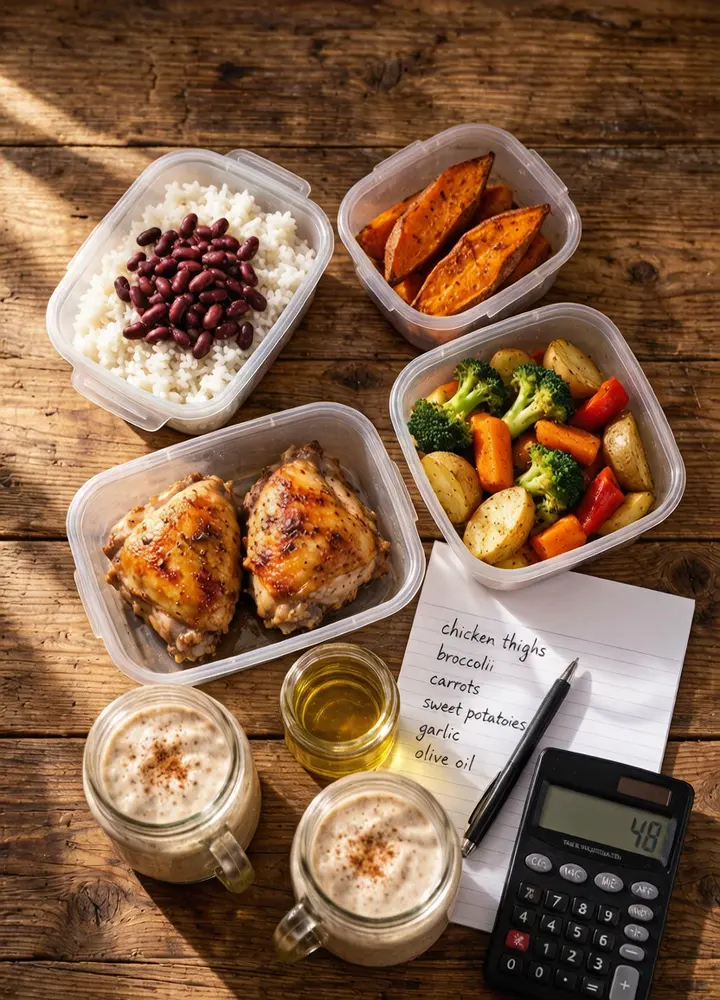
You cook a big batch of healthy food — grilled chicken, roasted sweet potatoes, steamed broccoli — and store it all in large family-style containers. At mealtime, you scoop out a "reasonable" amount onto your plate. It feels healthy. It feels controlled. It's neither.
What It Costs You
This one is sneaky. Serve family-style and the "reasonable scoop" grows across the week without you noticing. Monday's 4 ounces of chicken became Wednesday's 6 ounces; a "handful" of sweet potato turned into a heaping scoop. Studies consistently show people underestimate their intake by 20-40% when serving from large containers — a 2019 study in the Journal of the Academy of Nutrition and Dietetics found people served themselves 29% more pasta from a large container than a single-serving one. For weight loss that's disastrous: an extra 150 calories per meal, three times a day, is roughly a pound gained every 8 days from portion drift alone.
The Fix
Portion immediately after cooking, into single-serving containers. Don't wait until mealtime. When the food is fresh out of the pan or oven, divide it directly into the containers you'll eat from. Use the hand method as a guide: 1 palm of protein (4-6 oz), 1 cupped handful of carbs, 2 open handfuls of vegetables, and 1 thumb of fat per container.
This is the most overlooked mistake on the list because it's invisible — you won't notice the creep until the scale stops moving. For more, read our complete guide: How to Portion Control for Weight Loss.
Mistake #3: Ignoring Food Safety Rules
The Mistake
You finish cooking at 8 PM, pack hot food directly into containers, seal the lids, and stack them in the fridge. Or worse — you leave the containers on the counter to "cool down" for a few hours before refrigerating. You assume that if it smells fine, it's fine.
What It Costs You
The classic failure: a batch of chili packed while still steaming; the center takes hours to drop below 40°F, well past the 2-hour window. By Tuesday the chicken in it smells of ammonia and four containers go in the trash. Packing hot food into sealed containers creates a warm, moist pocket where bacteria multiply — and leaving food on the counter is worse, because bacteria double every 20 minutes in the 40-140°F danger zone. This all comes from the USDA's four food-safety steps — Clean, Separate, Cook, Chill — and the USDA estimates 48 million foodborne-illness cases a year in the U.S., with improper cooling a leading cause.
The Fix
Cool food before sealing and refrigerating. For soups and stews, set the pot in a sink of ice water and stir for about 5 minutes — a batch of turkey chili cools in roughly 25 minutes that way. For solids, spread them on a sheet pan or leave containers open in the fridge 20-30 minutes until the steam stops. Then seal. Always refrigerate within 2 hours of cooking.
Other food-safety essentials:
- Fridge temperature: Keep it at 40°F (4°C) or below. A $5 fridge thermometer is worth it — most home fridges run warmer than the dial suggests.
- Reheating: Reheat to 165°F internal. Microwaves leave cold spots, so stir halfway and let it rest a minute.
- Freezer safety: Frozen meals stay good quality for 2-3 months. Label with the freeze date.
- When in doubt, throw it out. Don't sniff-test questionable food — some harmful bacteria produce no odor.
Mistake #4: Eating the Exact Same Meal Every Day
The Mistake
You find one healthy meal you like — chicken, broccoli, and brown rice. You make 10 portions of it. Monday through Friday, lunch and dinner, it's the same container. It's efficient. It's disciplined. It's a recipe for quitting.
What It Costs You
Run the chicken-broccoli-rice loop for two straight weeks and by day 4 most people are resentful. Psychologists call it "sensory-specific satiety" — your enjoyment of one food drops fast with repetition even while your appetite for other foods stays high. That's why you can be "full" of chicken and still have room for ice cream. A narrow diet also leaves nutrient gaps over weeks. The fix isn't more willpower; it's variety without more cooking.
The Fix
Prep components, not complete meals. Instead of ten identical containers, prep individual components you can mix and match:
- Rotate 2 proteins: Grill chicken breasts and bake salmon fillets. Alternate days.
- Rotate 2 carbs: Make a batch of quinoa and a batch of roasted sweet potatoes.
- Rotate vegetables: Roast broccoli and saute green beans with garlic.
- Rotate sauces: Prepare 2-3 different dressings or sauces (lemon herb, spicy peanut, balsamic vinaigrette).
With 2 proteins × 2 carbs × 2 vegetables × 3 sauces, that's 24 possible combinations — enough variety to kill boredom with zero extra cooking time. Same protein, three different meals just by swapping the sauce.
Mistake #5: Skipping Vegetables Because They "Don't Reheat Well"
The Mistake
You've experienced the tragedy of reheated salad — wilted, soggy, sad. Or roasted broccoli that turns to mush in the microwave. So you solve the problem by just… leaving vegetables out. Your containers are 60% chicken, 40% rice.
What It Costs You
Skip the veg and meals become calorie-dense with hunger back by 3 PM. A cup of broccoli is 31 calories but fills real stomach space; that same space filled with rice is 200+ calories. Over a week, skipping vegetables means either constant hunger (unsustainable) or eating enough to feel full while adding hundreds of extra calories (counterproductive). A 2020 study found people who increased fiber lost an average of 3.7 pounds more than those who didn't — without changing anything else. Vegetables are the primary fiber source in this style of eating, and fiber is what keeps you full between meals.
The Fix
Choose vegetables that reheat well, or keep them raw. Not all vegetables turn to mush:
Reheat well (roast or steam for prep):
- Broccoli and cauliflower (slightly undercook — roast for 15 min instead of 20)
- Green beans
- Brussels sprouts (halved and roasted)
- Bell peppers and onions
- Carrots (roasted, not boiled)
- Zucchini (roasted in thick slices, not thin)
Best raw (add to container cold, don't reheat):
- Spinach or mixed greens (add dressing separately)
- Cucumber slices
- Cherry tomatoes
- Shredded cabbage or slaw mix
- Sugar snap peas
Kitchen note: Pack raw vegetables in a small separate compartment and add them after reheating the hot part. Crisp veg on hot protein is the difference between a meal that feels fresh and one that feels like leftovers — and it quiets most 3 PM snack cravings.
Mistake #6: Not Labeling or Dating Containers
The Mistake
You prep on Sunday. You stack identical containers in the fridge. By Wednesday, you can't remember which is Monday's chicken teriyaki and which is Tuesday's lemon herb chicken. By Thursday, you're playing "how long has this been in here?" with your lunch.
What It Costs You
Unlabeled containers create three problems: decision fatigue (open three boxes, want none of them, order delivery), food-safety risk (no way to tell Monday's from last week's), and waste (mystery boxes get ignored until visibly spoiled). The Natural Resources Defense Council found the average American family throws away $1,500 of food a year, and a big chunk is prepped food forgotten in the back of the fridge.
The Fix
Label everything with 3 pieces of information: what it is, the date it was made, and the date it should be eaten by. Blue painter's tape and a Sharpie work well — the tape peels off cleanly and costs about $3.
Example: "Chicken Burrito Bowl — Made 8/4 — Eat by 8/8"
Also use "first in, first out" (FIFO): when you add new containers, move older ones to the front. You'll grab the oldest first, which cuts waste. Kitchen note: labels take 30 seconds and save more food than any other habit on this page.
Mistake #7: Under-Seasoning Your Food
The Mistake
You're meal prepping for weight loss, so you keep things "clean." A sprinkle of salt, maybe some black pepper. No oil, no sauce, no seasoning. You've internalized the idea that flavor equals calories, and calories are the enemy.
What It Costs You
Bland food is what quietly ends most prep routines. Day 1 runs on willpower; by day 4, anything at the food truck sounds better than unseasoned chicken. It's worse than wasted time: bland meals don't register as "complete" in your brain, so you finish lunch physically full but psychologically unsatisfied — and that's exactly when the 3 PM snacking hits. A 2018 study in Appetite found meals rated "less satisfying" led to 27% more snacking within 3 hours versus equally caloric, flavorful meals.
The Fix
Season aggressively — most herbs and spices have zero calories. A calorie-free flavor arsenal for weight-loss prep:
- Dry spices (0 calories): Garlic powder, onion powder, smoked paprika, cumin, chili powder, Italian seasoning, curry powder, cinnamon, cayenne.
- Fresh herbs (+5 calories): Cilantro, parsley, basil, dill, green onions — add these fresh after reheating.
- Low-calorie liquid flavor: Soy sauce or tamari (10 cal/tbsp), hot sauce (0-5 cal), vinegar (0-5 cal), mustard (0-5 cal), lemon/lime juice (0-5 cal), salsa (10 cal/2 tbsp).
- Sauce on the side: Make a batch of low-calorie dressing and add 1-2 tablespoons just before eating.
Mistake #8: Prepping Without a Plan
The Mistake
You go to the grocery store on Saturday with a vague idea: "I'll buy healthy stuff and prep it tomorrow." You grab chicken, sweet potatoes, random vegetables, maybe some quinoa. Sunday arrives. You stare at the ingredients with no idea what to make. Three hours later, you have a chaotic assortment of under-seasoned food that doesn't form coherent meals.
What It Costs You
This is the most repeated mistake on the list: coming home with 4 pounds of chicken and one sad zucchini, or a mountain of brown rice and no protein by Tuesday. Planning failures — not willpower, not laziness — are the #1 reason people quit meal prep. The fix is a system you don't have to re-think every week.
The Fix
Fill out a meal prep template before you shop. Here's a framework that covers the bases:
| Category | How Much Per Person (3-4 Days) | Example |
|---|---|---|
| Protein #1 | 1.5 lbs (makes 4-5 portions) | Chicken breast |
| Protein #2 | 1 lb (makes 3-4 portions) | Ground turkey or tofu |
| Carb #1 | 1.5 cups dry (makes 4-5 portions) | Brown rice or quinoa |
| Vegetables (x3) | 2-3 lbs total (fills half each meal) | Broccoli, peppers, green beans |
| Sauces (x2) | 1 cup each | Lemon herb, spicy peanut |
Fill this out before you shop. It takes 5 minutes and saves hours of wandering. For the full beginner system, read: How to Start Meal Prep for Weight Loss: The Complete Beginner's Guide.
Mistake #9: Using the Wrong Containers
The Mistake
You use whatever is in the cabinet — old takeout containers, mismatched Tupperware with missing lids, that one container permanently stained orange from last year's curry. They're free and available, and you're trying to be practical.
What It Costs You
The typical first setup is a Jenga tower of mismatched plastic: lids that don't seal leak teriyaki into the work bag, and curry-stained tubs you can't see through get forgotten until they smell. There's also a real psychological effect: food in organized, matching containers feels intentional, while old sour-cream tubs feel like punishment. A uniform set of borosilicate glass containers (plus a few BPA-free plastic ones for the gym) makes sticking with it noticeably easier.
The Fix
Invest in a matched set of meal prep containers. It doesn't need to be expensive:
- Glass containers ($25-35 for a 5-pack): Best overall. Microwave and oven safe, don't stain or absorb odors, last for years. Look for borosilicate glass (more thermal-shock resistant).
- BPA-free plastic containers ($15-20 for a 10-pack): Lightweight, stackable, cheap. Make sure they're labeled microwave-safe. Replace every 6-12 months — scratches harbor bacteria.
- Single compartment > divided. Divided containers often under-portion vegetables and limit mixing. Single large compartments give flexibility.
- Uniform size. Same shape and size stacks neatly, lids are interchangeable, and the visual consistency is satisfying.
Make sure all containers are leakproof with silicone-seal lids. Test by filling one with water, sealing it, and shaking it upside down over the sink. If water escapes, find better ones. Browse leakproof glass containers on Amazon or read our full container buying guide.
Mistake #10: Trying to Make Everything From Scratch
The Mistake
You're committed. You're going to make your own marinara from fresh tomatoes, your own dressing from scratch, your own roasted veg medley you wash, peel, and chop by hand. You're going to be a meal prep hero.
What It Costs You
The from-scratch trap turns a 2-hour prep into a 5-hour marathon — homemade hummus, spice blend, and bone broth in one Sunday is a recipe for exhaustion and Sunday dread. By week 3, most people quit — not because the approach didn't work, but because it was made impossibly hard. The perfectionist's trap says shortcuts are "cheating." The truth: the best meal prep is the one you actually do. A $3 bag of pre-chopped broccoli that keeps you prepping beats a from-scratch masterpiece you never repeat.
The Fix
Use strategic shortcuts. A simple hierarchy for what's worth buying pre-made:
Smart shortcuts (buy pre-made):
- Pre-washed salad greens and spinach
- Pre-chopped vegetables (broccoli florets, cubed butternut squash, shredded carrots)
- Rotisserie chicken (remove skin, shred — 3 meals of protein for $5-7)
- Frozen vegetables (flash-frozen at peak ripeness, often more nutritious than "fresh")
- Jarred marinara sauce (look for ones with no added sugar)
- Canned beans (rinse to reduce sodium by 40%)
- Pre-cooked grains (frozen brown rice, shelf-stable quinoa pouches)
Worth making from scratch:
- Salad dressings (2 minutes, tastes 10x better, no preservatives)
- Spice blends (cheaper and you control the salt)
- Roasted vegetables (pre-chopped is fine, but pre-roasted = soggy)
For the budget angle, check out: Meal Prep for Weight Loss on a Budget: $50/Week.
The Meal Prep Mistakes Cheat Sheet
| Mistake | The Fix |
|---|---|
| 1. Prepping too much at once | Prep for 3-4 days, freeze extras |
| 2. Not portioning after cooking | Portion into single-serving containers immediately |
| 3. Ignoring food safety | Cool before sealing, refrigerate within 2 hours |
| 4. Same meal every day | Prep components, rotate sauces and seasonings |
| 5. Skipping vegetables | Choose reheat-friendly veg; pack raw veg separately |
| 6. Not labeling containers | Label with name + date made + eat-by date |
| 7. Under-seasoning food | Use spices, herbs, vinegar, and hot sauce liberally |
| 8. No plan before shopping | Fill out a meal prep template before grocery shopping |
| 9. Wrong containers | Invest in uniform, leakproof, microwave-safe containers |
| 10. Everything from scratch | Use smart shortcuts — pre-chopped veg, rotisserie chicken, frozen ingredients |
Frequently Asked Questions
What is the biggest meal prep mistake for weight loss?
The biggest one is cooking 20 meals at once. Fifteen identical containers usually mean five in the trash and two takeout orders by Friday. The fix that sticks: prep 6-8 meals for Monday through Thursday, then do a 30-minute mini-prep Wednesday evening to cover Friday and the weekend. Food stays fresh and you never hit the "I can't look at another container" wall. If you need a full week covered, freeze half on Sunday.
How long can meal prep food stay fresh in the refrigerator?
Cooked meals are safe in the fridge for 3-4 days, per the USDA FoodSafety.gov Cold Food Storage Chart; after that the bacterial risk climbs. Cool food in an ice bath (about 25 minutes for a pot of chili) and refrigerate within 2 hours. For meals on days 5-7, freeze them Sunday and thaw in the fridge the night before.
Why does meal prep taste bland and boring by day 3?
Two reasons: under-seasoning (flavor doesn't mean calories) and eating the exact same bowl five days straight. By day 4, the food truck wins. The fix: season harder than feels natural, keep 2-3 sauces in rotation (lemon herb, spicy peanut, balsamic), and add fresh herbs or a squeeze of lemon right before eating. Changing one component breaks the monotony without extra cooking.
Do I need special meal prep containers?
You need containers that are airtight, microwave-safe, single-serving, and uniform so they stack. A uniform set of borosilicate glass containers (plus a few BPA-free plastic ones for the gym) is the standard recommendation. Glass doesn't hold odor or stains and lasts for years.
Ready to put these fixes into practice?
- How to Start Meal Prep for Weight Loss: The Complete Beginner's Guide
- Meal Prep for Weight Loss on a Budget: $50/Week
- How to Portion Control for Weight Loss: The Complete Guide
- Meal Prep Storage Tips: Keep Your Food Fresh Longer
Get the Free Meal Prep Checklist
Printable one-page PDF with the 10 mistakes to avoid, a meal prep planning template, and a food safety cheat sheet. Stick it on your fridge and never waste a meal prep Sunday again.
References
- USDA FoodSafety.gov — 4 Steps to Food Safety
- USDA FoodSafety.gov — Cold Food Storage Chart