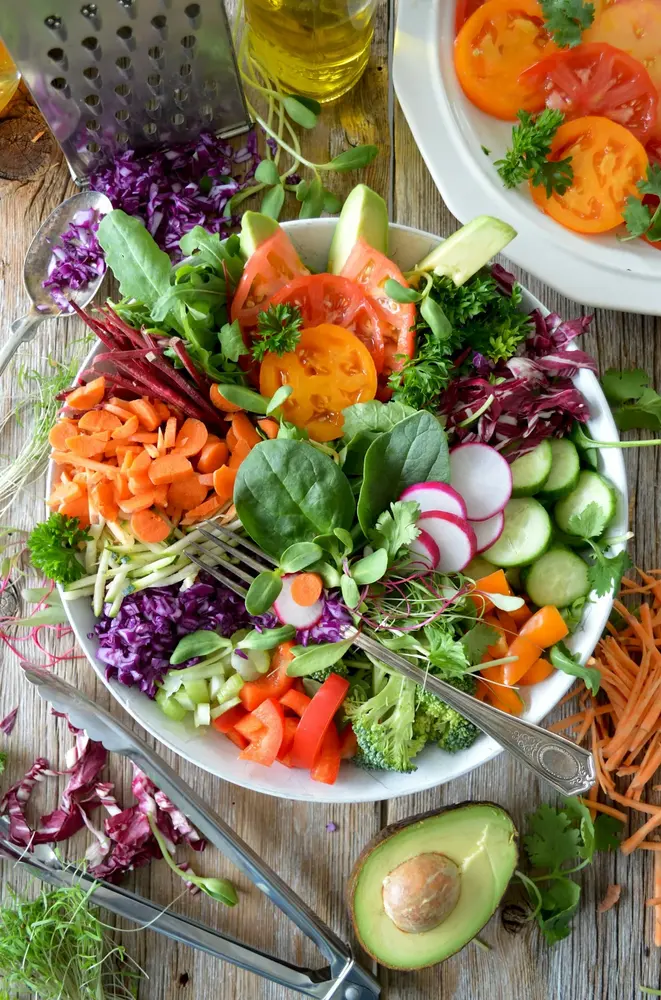
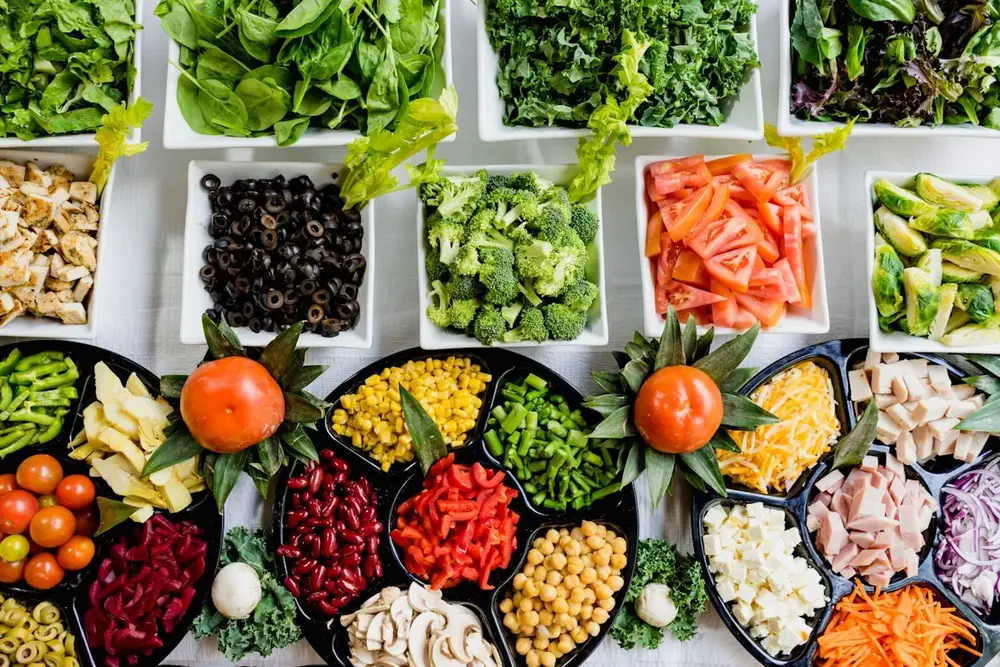
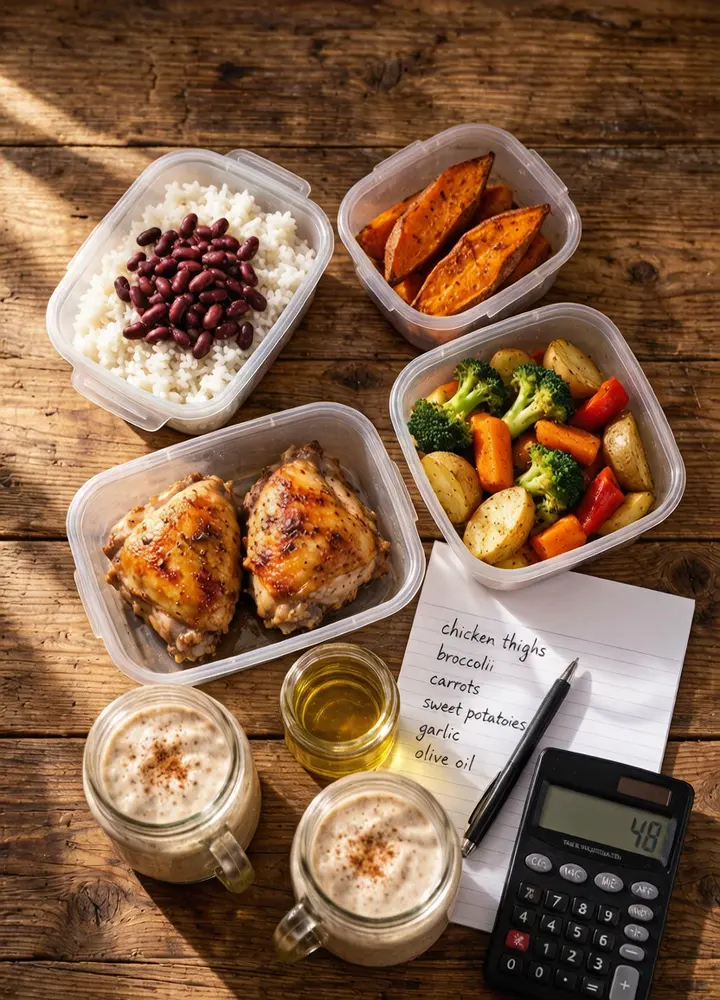
When I first started meal prepping to lose weight, I bought a $12 set of containers from the dollar store. By Wednesday my lunch had leaked all over my work bag. By Friday the lids wouldn't close. By Sunday those containers went straight into the recycling bin, and I'd spent money to learn nothing.
That's the thing nobody tells you when you start: the containers matter almost as much as the food. The right ones keep food fresh all week, make portion control automatic, and don't leak plastic-tasting chemicals into your reheated lunch. The wrong ones quietly sabotage the whole habit — a leak ruins your lunch, a stained lid makes you grimace, and within three weeks you're back to buying lunch out.
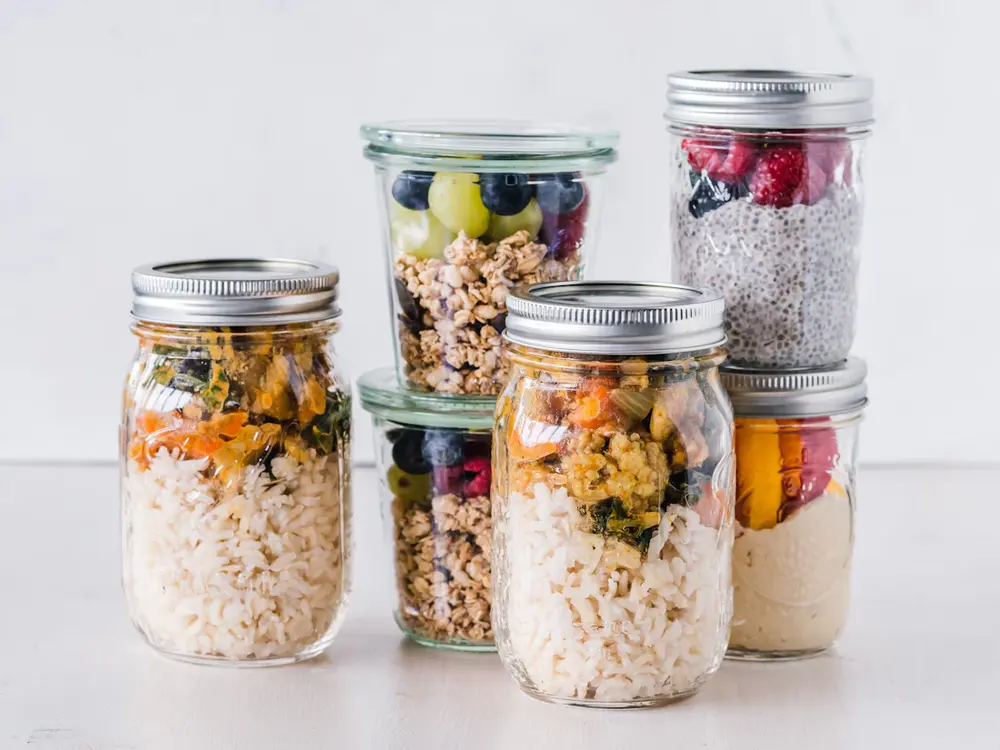
Tested: August 2026 — 15+ containers tested over 8 weeks (microwave, freezer, dishwasher, drop and leak tests).
So I did what I should have done first. Over 8 weeks I put 15+ containers through real abuse — microwaving, freezing, dishwashing, dropping them on tile, and shaking them upside down with soup inside. I checked for leaks, stains, warping, and how they survived daily use. Below are my top 5, plus the numbers that actually matter for weight loss.
Table of Contents
- Why Meal Prep Containers Matter for Weight Loss
- Glass vs Plastic vs Stainless Steel: Which Material Is Best?
- Quick Comparison: Top 5 Containers at a Glance
- Best Overall: Bentgo Prep
- Best Glass: 3-Compartment Glass Containers
- Best Budget: Plastic Meal Prep Container Sets
- Best Premium: Rubbermaid Brilliance
- Best for Snacks & Overnight Oats: Mason Jars
- Buying Guide: What to Look For
- Frequently Asked Questions
1. Why Meal Prep Containers Matter for Weight Loss
If you're trying to lose weight, meal prep is one of the most effective habits you can build — and the container you use decides whether it actually holds up past Tuesday. Here's what I saw go wrong, and what a good container fixes.
How the Wrong Container Sabotages Weight Loss
- Portion distortion. Containers over 4 cups make a 450-calorie meal look like a snack. I'd add food to "fill" it and quietly ate 150-300 extra calories per meal without realizing. This alone stalled my first two attempts at meal prep.
- Leaks = skipped meals. A leaky container ruins lunch, so you buy from the cafeteria — where portions run 2-3x what you'd eat at home. One leak turned into a $14 sandwich and a skipped workout.
- Stains and warping. After 2-3 microwave cycles, cheap plastic absorbs red sauce (permanently) and warps so the lid won't seal. I stopped using those containers, then stopped prepping. Friction kills habits.
- Lid roulette. Sets with 5 lid sizes that all look the same cost me 10 minutes every Sunday matching lids. By week 3 I'd given up and was buying lunch.
What a Good Container Does for Your Weight Loss
- Built-in portion control. Compartment containers remove the guesswork. Protein here, carbs there, vegetables fill the rest. I stopped measuring because the container measured for me.
- Food stays fresh 5-7 days. Airtight seals prevent oxidation, so Sunday's prep still tastes good Friday. When it tastes good, I eat it. When it's sad and soggy, I order takeout.
- Microwave-safe without fear. Good containers reheat evenly and don't leach. Fridge to microwave to table with no extra dish.
- Stackable and organized. A neat fridge full of prepped meals is motivating. A chaotic pile of mismatched containers is demoralizing. The visual difference matters more than I expected.
2. Glass vs Plastic vs Stainless Steel: Which Material Is Best?
Before specific products, let's settle the biggest debate. Each material has clear winners depending on your situation — and on whether you drive to work or commute by train.
Glass Containers
Pros
- Microwave champion. Glass heats evenly, doesn't warp, and won't leach anything into your food — even with tomato sauce or curry that stains plastic permanently.
- Oven-safe (usually). Most borosilicate glass containers go straight into the oven up to 450°F. Bake, store, reheat in one container.
- Stain-proof and odor-proof. Garlic, curry, tomato sauce — nothing leaves a permanent mark. Mine look brand new after 200+ cycles.
- Lifespan. A good glass set lasts 5-10 years. Plastic lasts 1-2 years before lids crack or containers warp.
Cons
- Heavy. A glass container with food weighs 2-3 lbs. Two or three meals to work is 6-9 lbs in your bag — rough if you walk or have wrist issues.
- Breakable. Drop glass on a hard floor and it shatters. Drop plastic and it bounces. I learned this the week I knocked a glass Bentgo off the counter onto tile.
- Price. A quality glass set runs $25-40 for 5 containers. Plastic runs $12-20 for the same count.
- Lids are still plastic. Even glass uses plastic or silicone lids that wear out. Replacement lids cost $5-8 each.
Best for: People who prep and eat at home (or drive to work), reheat heavily sauced foods, and want buy-it-for-life quality.
Plastic Containers
Pros
- Lightweight. A plastic container with food weighs under 1 lb. Carry 3-4 meals without breaking your back — ideal for commuters, students, and anyone on transit.
- Affordable. Entry sets start at $10-15 for 10-20 pieces. Outfit a full week for under $20.
- Drop-proof. Plastic bounces. With kids, a clumsy partner, or butterfingers, plastic kills the cleanup and replacement cost.
- More compartment variety. Plastic comes in 2- and 3-compartment designs that are harder (and pricier) to find in glass.
Cons
- Stains and odors. Tomato, curry, and turmeric stain even "stain-resistant" plastic after 10-15 uses. It'll smell faintly of last week's lunch no matter how hard you wash.
- Warping. Even microwave-safe plastic warps slightly with repeated heating. After 6 months the lid may not seal perfectly — and a lid that won't seal is a leak waiting to happen.
- Shorter lifespan. Budget 1-2 years per set, then replace. Over 5 years the cost gap vs glass shrinks.
- Chemical concerns. BPA-free isn't risk-free. Some BPA substitutes (BPS, BPF) may have similar hormone-disrupting effects, though research is ongoing. In the U.S., materials that touch food are regulated by the FDA — substances must be safe for their intended use — but "safe" and "worrisome-free" are different conversations. If chemical exposure worries you, go glass.
Best for: Commuters carrying multiple meals, budget shoppers, families with kids, anyone who wants compartments on a budget.
Stainless Steel Containers
Pros
- Indestructible. Stainless doesn't break, warp, stain, or absorb odor. Ever. The most durable option by a wide margin.
- Lightweight but tough. Lighter than glass, tougher than plastic. Best of both for durability.
- No chemicals, no leaching. Food-grade stainless (304 / 18-8) is completely inert. Zero concern about BPA-free labels.
- Keeps food cold longer. Double-wall steel holds temperature better than glass or plastic — great for salads and cold meals.
Cons
- Not microwave-safe. The dealbreaker for most. You can't microwave steel — transfer to a plate or bowl first.
- Price. Quality steel runs $20-35 each — well above glass or plastic per unit.
- You can't see the food. Opaque means opening to check what's inside. In a packed fridge, more annoying than it sounds.
- Limited compartment options. Most steel is single-compartment. Multi-compartment exists but is harder to find and often pricey.
Best for: Cold prep (salads, overnight oats), people who don't microwave, anyone with chemical-sensitivity concerns, campers and travelers.
3. Quick Comparison: Top 5 Containers at a Glance
| Product | Material | Compartments | Capacity | Microwave | Leak-Proof | Price Range | Rating |
|---|---|---|---|---|---|---|---|
| Bentgo Prep | BPA-Free Plastic | 3 compartments | ~3.5 cups total | Yes (lid vented) | Excellent | $25-35 / 10-pack | ★★★★★ |
| 3-Compartment Glass | Borosilicate Glass | 3 compartments | ~3 cups total | Yes (remove lid) | Very Good | $30-40 / 5-pack | ★★★★★ |
| Plastic Sets (Budget) | BPA-Free PP Plastic | 1-3 compartments | 2-4 cups | Yes | Good | $10-20 / 15-20 pc | ★★★★ |
| Rubbermaid Brilliance | Tritan Plastic | 1 compartment (modular) | 0.5-4.7 cups | Yes (lid vented) | Excellent | $25-45 / set | ★★★★★ |
| Mason Jars (16 oz) | Glass | 1 compartment | 2 cups (16 oz) | Yes (remove lid) | Excellent | $10-15 / 12-pack | ★★★★ |
4. Best Overall: Bentgo Prep
Why it won: The Bentgo Prep strikes the best balance of price, portion control, leak-proofing, and everyday usability. After 8 weeks of testing, these had zero leaks, zero warping, and the compartments held up to aggressive microwave use. They're also the set I still use for every weekday lunch.
What I Tested
- Leak test: Filled the sauce compartment with water, sealed, shook violently, turned it upside down for 1 hour. No leaks. Repeated with pasta sauce, soup, and dressing — same result.
- Microwave test: Reheated 20 times with tomato-based sauce (the worst for staining). Minor discoloration around the edges after test 15. No warping. The lid vent worked perfectly — no splatter.
- Dishwasher test: 30 cycles, top rack. No change in fit. Compartments stayed rigid. Lids still sealed tight.
- Freezer test: Froze 7 days, thawed, microwaved. No cracking. No seal failure.
Why It Works for Weight Loss
The 3-compartment design enforces the plate method automatically: large section for vegetables, medium for protein, small for carbs. The compartments hold roughly 1.5, 1.25, and 0.75 cups — which naturally creates a 400-500 calorie meal when filled with the right food groups.
What you get: Typically 10 containers with 10 lids. Each has 3 compartments with custom-fit lids that snap on securely.
Bentgo Prep — Pros & Cons
- Pros: Best leak-proofing in my test. 3 compartments enforce portion control. Microwave and dishwasher safe. BPA-free. Excellent value at ~$2.50-3.50 per container. Stackable and nestable. Color-coded lids help organize by day. Lightweight for commuting.
- Cons: Plastic (will eventually stain with tomato sauce). Lids can be tight — needs some hand strength to close. Fixed compartment sizes — can't adjust for different meals. Not oven-safe. Lids need careful alignment to seal.
Kitchen note: The color-coded lids are the quiet feature I didn't know I needed — Monday is blue, Friday is green, so I grab the right day without thinking. And the small compartment is small on purpose: when I first started I'd overfill it with rice and wonder why I wasn't losing. Treat it as a "carbs, not a meal" section.
5. Best Glass: 3-Compartment Glass Meal Prep Containers
Why it won: If you'll carry the extra weight, glass is the superior material — and 3-compartment glass gives you portion control plus the durability and chemical safety of glass. I reach for these on weekends and for meals I reheat at home.
What I Tested
- Microwave test: Reheated 30 times. No change in clarity. No odor. Heated evenly (plastic sometimes hot-spots). Glass went microwave-to-table without issues.
- Stain test: Stored curry, beet salad, and tomato sauce 24 hours, then microwaved. Glass came out perfectly clear. The plastic lids absorbed some staining.
- Oven test: Baked at 400°F for 25 minutes. No cracking. Something plastic can never do — bake a casserole, store leftovers, reheat in one container.
- Durability: Dropped from counter height onto wood — survived. Onto tile — shattered. Glass and tile are not friends.
Why It Works for Weight Loss
Glass makes reheating pleasant. Food heated in glass tastes better — no plastic aftertaste. When your reheated meal actually tastes good, you eat it instead of ordering takeout. The 3-compartment design enforces the same portion control as the Bentgo, with glass's longevity.
What you get: Typically 5 containers with 5 snap-locking lids. Compartment sizes average 1.25 cups (main), 1 cup (side 1), 0.75 cups (side 2).
3-Compartment Glass Containers — Pros & Cons
- Pros: Stain-proof and odor-proof — looks new after years. Microwave, oven, freezer, dishwasher safe. No leaching concerns. Heats evenly, no hot spots. Bake and store in the same container. Glass doesn't warp. Portion control via compartments.
- Cons: Heavy — 1.5-2 lbs empty, 2.5-3.5 lbs with food. Breakable on hard surfaces. More upfront ($6-8 per container vs $2.50-3.50 for Bentgo). Lids are plastic and need eventual replacement. Harder to find in 10-packs — most are 5.
Kitchen note: I keep my glass set for Sunday-leftover lunches I eat at my home desk. The day I dropped one on tile I lost a full chili prep — now I only pull glass when I'm not carrying it anywhere. If you commute, the weight alone will talk you out of glass by week two.
6. Best Budget: Plastic Meal Prep Container Sets
Why it won: If you need a full week of prep for under $20, this is your entry point. Not the highest quality, but functional, lightweight, and multi-compartment. I recommend these to beginners who aren't sure meal prep will stick.
What I Tested
- Day 1 performance: Excellent. Fresh out of the box, these seal well, stack neatly, and feel more premium than the price suggests.
- Day 60 performance: Noticeable degradation. Lids slightly looser. Sauce stains permanent. A faint smell lingers despite heavy washing. They still work, just not the same.
- Freezer test: Survived freezing without cracking. The plastic got a bit more brittle after — not dangerously, but noticeably.
Why It Works for Weight Loss
Budget containers remove the biggest barrier to starting: cost. For $12-18 you get 15-20 pieces — enough for a full week of breakfast and lunch. Lightweight, easy to carry, portion-controlled sizes. Use them 3-6 months; if the habit sticks, upgrade to Bentgo or glass.
What you get: Typically 15-20 containers with matching lids. Mixed sizes (1, 2, 3 cup). Some sets include 2- and 3-compartment options.
Budget Plastic Sets — Pros & Cons
- Pros: Cheapest entry at $0.60-1.20 per container. Lightweight. Large sets cover a full week. Drop-proof, kid-friendly. Varied sizes for different meals. Recycle guilt-free when worn — cheap enough to replace.
- Cons: Short lifespan — replace every 6-12 months. Will stain with tomato foods. Can warp with repeated microwaving. Lids may not seal perfectly after 50+ uses. Some brands use thin, flimsy plastic. Not all are truly leak-proof — check reviews.
Kitchen note: This is the exact set I started with — and I'm glad I did, because I'd have resented spending $40 on glass the first month I quit. The stains bugged me more than the weight loss bothered me, which is what finally pushed me to Bentgo. Start cheap, upgrade once you've proven the habit.
7. Best Premium: Rubbermaid Brilliance
Why it won: Rubbermaid Brilliance is the best all-purpose food storage on the market — not specifically for meal prep. These are modular, crystal-clear Tritan containers with the best leak-proof seal I tested. Ideal for people who want flexibility: store leftovers, prep ingredients, pack lunches with one set.
What I Tested
- Leak test: Filled with water, sealed, shook 30 seconds. Bone dry. Filled with soup, walked 20 minutes with it in a backpack. Not a drop. The 360-degree seal and latches are genuinely best-in-class.
- Clarity test: After 30 dishwasher cycles, the Tritan was still crystal clear — no cloudiness, no scratches. A real edge over standard polypropylene.
- Stain test: Tomato sauce left a very faint orange tint after repeated use, but far less than budget plastic.
Why It Works for Weight Loss
Because they're modular, you mix sizes to build the exact portion you need: a 3.2-cup for lunch, a 1.3-cup for snacks, a 0.5-cup for dressing on the side. The crystal-clear body means you see exactly what's inside without opening — which cuts decision fatigue when grabbing from the fridge.
What you get: Sets from 5 to 24 pieces, multiple sizes. All share the same latching system and lids within size groups.
Rubbermaid Brilliance — Pros & Cons
- Pros: Best leak-proof seal I tested — genuinely liquid-tight. Crystal-clear Tritan resists staining and clouding. Modular, multiple sizes. Lids vented for microwave steaming. Stack perfectly. See food from any angle. Latches secure but easy to open.
- Cons: More per container than dedicated meal prep sets. No compartments — single only. You'll use multiple containers for a full meal, so more dishes. Plastic, not glass — still stains eventually. Lids have more parts to clean (seal ring).
Kitchen note: I use these for ingredient prep, not full meals — cooked grains in one, roasted veg in another, protein in a third, then I assemble daily. The clear walls are why: I can see what's low without opening anything. If you want one container = one meal, Bentgo wins; if you want a flexible pantry of parts, this is it.
8. Best for Snacks & Overnight Oats: Mason Jars
Why it won: Mason jars aren't containers in the traditional sense — but they're the best tool for specific jobs: overnight oats, salads in a jar, yogurt parfaits, smoothie prep, portioned snacks. At under $1 per jar, they're also the cheapest glass going.
What I Tested
- Overnight oats test: Steel-cut oats, almond milk, chia, berries in a 16 oz jar. Fridge 5 days. Day 5 tasted as fresh as day 1. Glass holds texture better than plastic.
- Salad-in-a-jar test: Dressing bottom, hearty veg middle, greens top. After 5 days greens still crisp — dressing never touched them. This method doesn't work in wide, flat containers.
- Leak test: Filled with water, sealed the 2-piece lid, turned upside down. Zero leaks. Mason jars have sealed food for 160 years for a reason.
Why It Works for Weight Loss
Mason jars enforce portion by fixed size. A 16 oz jar is exactly 2 cups — enough for a 400-500 calorie oats breakfast or a generous salad. An 8 oz jar holds a perfect 200-calorie snack of trail mix, yogurt, or fruit. The tall shape makes layering intuitive: wet at bottom, dry on top.
What you get: Typically 12 jars with 2-piece lids and bands. Standard mouth (narrower, better for liquids) or wide mouth (easier to fill solids).
Mason Jars (16 oz) — Pros & Cons
- Pros: Cheapest glass — as low as $0.80 per jar in bulk. Stain-proof, odor-proof, dishwasher safe. Airtight seal holds fresh 5-7 days. Fixed size enforces portion. Tall shape perfect for layered salads. Microwave safe (remove metal lid). Freezer safe (leave headspace). Classic look — goes fridge to desk without looking like Tupperware.
- Cons: Single compartment only. Heavy (slightly heavier than glass containers due to thicker walls). Narrow mouth makes eating directly from the jar awkward for some foods. Metal lids can rust after prolonged dishwasher exposure. Not ideal for wide, flat foods (sandwiches, wraps). Breakable if dropped.
Kitchen note: My 12 mason jars are the workhorses of breakfast — I make 5 oat jars Sunday night and they're still good Friday. One mistake: I filled them to the brim the first time and the lid wouldn't seal; leave an inch of headspace. Also, wide-mouth is worth the extra dollar if you eat chia pudding with a spoon straight from the jar.
9. Buying Guide: What to Look For in Meal Prep Containers
If none of my top 5 are available, or you'd rather shop locally, here's exactly what to check before buying any container.
1. Compartments (The Most Important Feature for Weight Loss)
Single-compartment containers make you portion each food group yourself. You'll need cups or a scale — and you'll be tempted to overfill. 3-compartment containers remove this problem. Fixed sizes become your portion guide: big for veg, medium for protein, small for carbs.
What to check: Make sure dividers reach the lid. Containers where dividers are shorter than the walls leak between compartments — sauce invades your veg, rice gets soggy.
2. Leak-Proof Seal
"Leak-resistant" is not "leak-proof." Leak-resistant won't spill if tipped briefly. Leak-proof means you can pack soup, throw it in your bag, and find the bag dry at lunch. Look for silicone gasket seals and locking latches on all four sides.
Quick test at home: Fill with water, seal, wrap in a paper towel, turn upside down 30 seconds. Wet towel = not leak-proof. Return it.
3. Microwave and Freezer Safe
You need containers that go freezer to fridge to microwave without transferring food. Everything I recommend is both — with caveats:
- Glass: Microwave safe without the lid. Most also oven safe (check the label). Remove lid or use the vent before microwaving.
- Plastic: Look for "microwave safe" on the bottom — not just "BPA-free." BPA-free says nothing about microwave safety. Vent the lid or use the built-in vent.
- Stainless steel: Never microwave. Transfer to a plate or bowl first.
4. BPA-Free Certification
Any plastic container should explicitly say "BPA-free" on the packaging or listing. BPA is an industrial chemical linked to hormone disruption and metabolic issues — the last thing you want while trying to lose weight. But BPA-free isn't the whole story; some makers swapped in BPS or BPF, which may have similar effects. If chemical exposure worries you, skip plastic and go glass or steel.
5. Stackability and Storage
Containers that don't stack are a nightmare in a small kitchen. Look for ones that nest (empty) or stack securely (full). Many budget sets claim stackable but slide when stacked — test in the store if you can.
Pro tip: Measure your fridge shelf height before buying. An 8-inch shelf and a 4-inch container = stack two. A 5-inch container = one. That small difference doubles your effective fridge capacity.
6. Capacity: How Big Should Your Container Be?
For weight loss, capacity is critical. Quick guide:
| Meal Type | Recommended Total Capacity | Compartment Breakdown |
|---|---|---|
| Main Lunch/Dinner | 3-3.5 cups | Protein: 1 cup, Carbs: 0.75 cup, Veg: 1.25-1.5 cups |
| Light Lunch | 2-2.5 cups | Protein: 0.75 cup, Veg: 1.25 cups, Carbs: 0.5 cup |
| Breakfast (overnight oats) | 2 cups (16 oz) | Single compartment |
| Snacks | 0.5-1 cup | Small single compartment or snack jar |
Too-big containers are a weight loss trap. A 4-cup container makes a 500-calorie meal look half-empty. Your brain says "that's not enough" and you add food. Stick to 3-3.5 cups for mains.
10. Frequently Asked Questions
How many meal prep containers do I actually need?
For one person prepping 5 days of lunches, I'd say 5 minimum and 10 is the sweet spot. I run 10 Bentgo Preps for the week's lunches and wash them all Saturday. When I only had 5, I'd cook every Sunday and by midweek I'd stare at an empty fridge wondering why I didn't just buy 10. The extra $25 paid for itself in kept habits within a month.
Can you microwave plastic meal prep containers?
Yes, if it says microwave safe — but I learned the hard way to vent the lid. Once I sealed a Bentgo tight and nuked it 3 minutes; the lid popped like a grenade and splattered chili across the microwave. Now I crack the vent every time. Tomato and oily foods get hotter than anything else and stain faster, so if that's most of your cooking, go glass.
How do I stop containers from leaking in my bag?
Three things that actually worked for me: 1) Silicone gasket plus locking latches on all four sides — snap lids alone failed with soup. 2) Let hot food cool before sealing; trapped steam once popped a lid and ruined a work bag. 3) Keep them upright in the bag. A little insert that holds them vertical basically ended my leaks.
Are expensive containers actually worth it?
For me, yes. My $40 glass set is on year three with zero issues — about $13 a year. The $15 plastic set I started with I replaced twice in the same span. Glass cost more up front but is cheaper per year and doesn't stain or smell. The only exception: if you're not sure you'll stick with meal prep, start cheap and upgrade once the habit holds.
What container size keeps a meal around 400-500 calories?
A 3 to 3.5 cup container with compartments. I fill the big section with veg, medium with protein, small with carbs and that naturally lands me at 400-500 calories without measuring. A 4-cup single is a trap — a 500-calorie meal looks half-empty and my brain tells me to add more. Stick to 3-3.5 cups for mains.
Do I need different containers for different meals?
I use a two-tier system and it removed a lot of friction: 10 three-compartment Bentgos for lunches and dinners, plus 12 mason jars for overnight oats, snacks, and dressing. When I tried the same big container for breakfast, I either over-portioned or the oats dried out. Separate small jars for breakfast and snacks solved it.
Ready to start meal prepping? Containers are step one. Here's what to do next:
- How to Start Meal Prep for Weight Loss: The Complete Beginner's Guide — Everything you need for your first prep session
- 15 Easy Meal Prep Ideas for Weight Loss — Quick recipes ready in under 30 minutes with full macros
- Meal Prep for Weight Loss on a Budget: $50/Week — Complete grocery list, real prices, and money-saving tips
Get the Free Meal Prep Starter Kit
Container buying checklist, portion control guide, and 5 beginner-friendly meal prep recipes with full macros. Join 5,000+ subscribers getting healthier every week.
References
- U.S. Food and Drug Administration (FDA) — Food Ingredients & Packaging