I spent two years "dieting" before I understood the one thing that actually moved the scale: protein, not willpower. My first attempt at meal prep was a tray of plain chicken and broccoli — and by Thursday I was elbow-deep in a gas-station taquito. The food wasn't the problem. The protein wasn't the problem. The problem was I never ate enough of it to stop being hungry.
When I finally fixed that — building every lunch around 35-44g of protein — the afternoon snacking just… stopped. Not because I was "being good," but because I wasn't hungry. This guide is the exact playbook that took me from 198 to 156 lb: 10 meal prep recipes, each with 30+ grams of protein, all under 500 calories per serving.
Each recipe includes full macros, storage instructions, and a note on what I'd change next time. Plus a protein powder section that doesn't pretend powder is magic.
Table of Contents
- Why Protein Is Your Secret Weapon for Weight Loss
- 10 High-Protein Meal Prep Recipes (All 30g+ Protein)
- How Much Protein Do You Actually Need?
- 5 Meal Prep Tips to Hit Your Protein Goals
- Best Protein Powder for Weight Loss (And How to Use It)
- Common High-Protein Diet Mistakes to Avoid
- Frequently Asked Questions
My High-Protein Numbers
These are the figures I actually planned around during my 4.5-month cut. They're not a study — they're what one person (me) ate to drop 42 lb while keeping the gym strength I cared about:
| Metric | What I aimed for | What actually happened |
|---|---|---|
| Daily protein | ~150 g (target body weight in grams) | Landed 140-160 g most days by habit |
| Protein per meal | 35-45 g | Every recipe here delivers the floor at 30g+ |
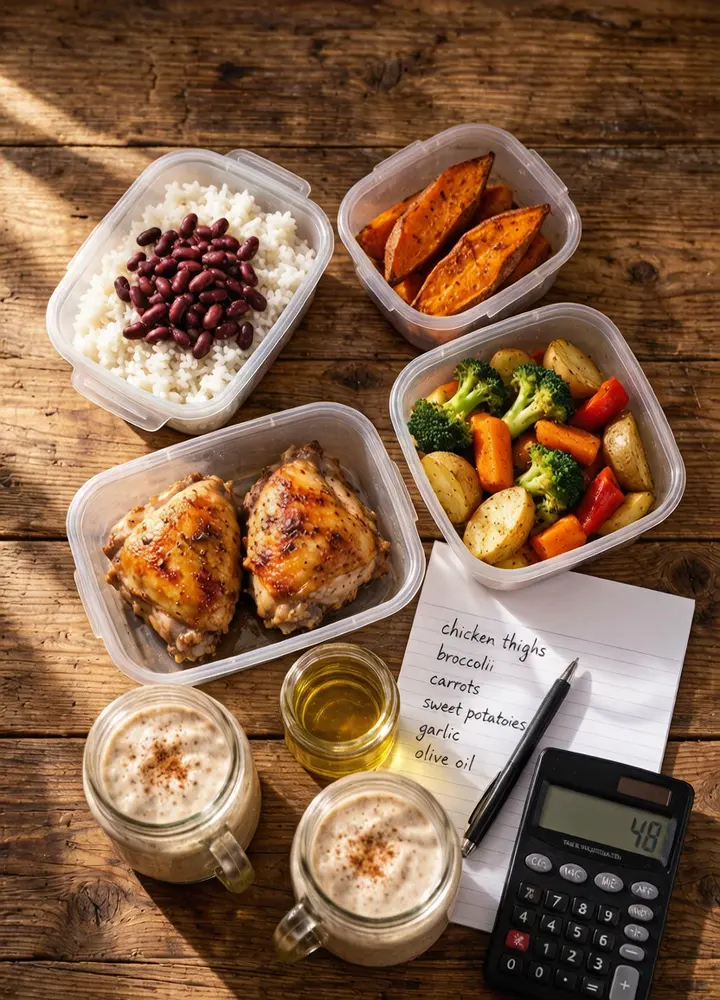
| Sunday cook time | Under 2 hours | ~95 min for a full week of lunches |
| Weekly grocery cost | ~$55 | ~$52 with a written list, no impulse buys |
| Result | Fat loss without losing strength | 42 lb in 4.5 months, lifts held steady |
1. Why Protein Is Your Secret Weapon for Weight Loss
I used to think weight loss was about eating less. It's really about eating less while not being miserable. Protein is the macronutrient that does that job:
- It crushes hunger. Protein bumps satiety hormones (PYY, GLP-1) and drops ghrelin, the hunger hormone. In one study, people who raised protein from 15% to 30% of calories ate about 441 fewer calories a day without trying to restrict. When I went high-protein, my 3 p.m. "I need a snack" feeling basically vanished.
- It preserves muscle on a deficit. Lose weight without enough protein and up to 25% of what you lose is muscle. Muscle burns more at rest than fat does, so losing it slows your metabolism. I was still squatting twice a week — protein is what kept that strength from leaking away.
- It burns calories just to digest. The thermic effect of protein is 20-30% — 100 calories of chicken costs 20-30 calories to process. Carbs are 5-10%, fat is 0-3%. Every gram works a little harder for you.
2. 10 High-Protein Meal Prep Recipes (All 30g+ Protein)
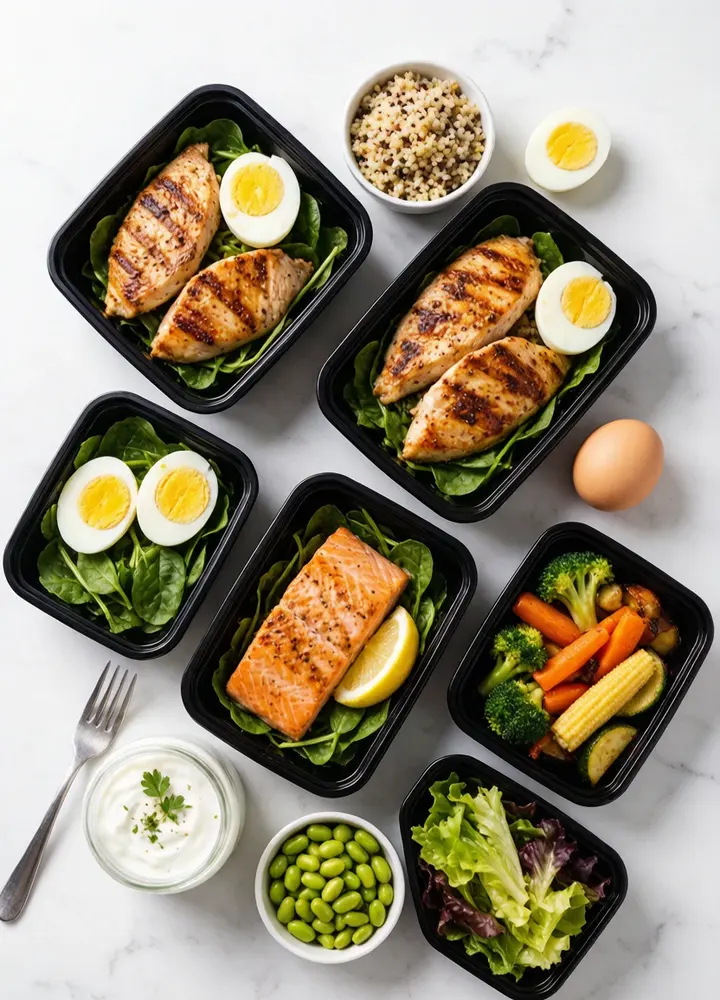
Every recipe below is built to maximize protein while keeping total calories under 500. They all store 3-5 days refrigerated and reheat well. Macros are per serving. The "Kitchen note" on each one is what you'd want to know before making it for the first time.
1. Garlic Herb Chicken Breast with Roasted Vegetables
Ingredients
- 4 boneless skinless chicken breasts (6 oz / 170g each)
- 2 tbsp olive oil
- 4 cloves garlic, minced
- 1 tsp dried rosemary
- 1 tsp dried thyme
- 1 tsp paprika
- 1/2 tsp salt, 1/4 tsp black pepper
- 4 cups broccoli florets
- 2 medium sweet potatoes, cubed
Instructions
- Preheat oven to 400°F. Line two baking sheets with parchment.
- Mix olive oil, garlic, rosemary, thyme, paprika, salt, and pepper in a small bowl.
- Arrange chicken on one sheet; brush with half the seasoning mixture. Toss sweet potato and broccoli with remaining mixture on the other sheet.
- Bake chicken 22-25 min (165°F internal). Roast vegetables 20-25 min until tender.
- Divide into 4 containers: 1 chicken breast + 1 cup veg + 3/4 cup sweet potato.
- Storage: 4 days refrigerated. Reheat 2 minutes in microwave.
Kitchen note: This is my baseline. The trick is baking the chicken and veg on separate trays — chicken needs the full 25 min, broccoli turns to mush if it stays that long. And let the chicken rest 5 minutes before dividing or the juices run out and you're left with dry sad protein.
2. Lean Ground Turkey Sweet Potato Bowls
Ingredients
- 1 lb (450g) 93% lean ground turkey
- 2 medium sweet potatoes, cubed
- 1 can (15 oz) black beans, drained and rinsed
- 1 tbsp olive oil
- 1 tsp cumin, 1 tsp chili powder
- 1/2 tsp garlic powder, 1/2 tsp salt
- 1/2 cup plain Greek yogurt
- Juice of 1 lime
- Fresh cilantro for garnish
Instructions
- Preheat oven to 425°F. Toss sweet potato cubes with olive oil and a pinch of salt. Roast 18-20 min.
- Brown turkey in a skillet over medium-high heat. Add cumin, chili powder, garlic powder, salt. Cook until no longer pink (~8 min).
- Stir in black beans and cook 2 more minutes.
- Mix Greek yogurt and lime juice for crema.
- Assemble: turkey-bean mixture, roasted sweet potato, drizzle of lime crema, cilantro.
- Storage: 4 days refrigerated. Store crema separately. Reheat bowl and add crema after.
Kitchen note: Use 93% turkey, not 99% — the extra fat keeps it from tasting like cardboard, and the calories are still low. Pack the lime crema in a tiny separate container; if you dress the bowl Monday it's soggy by Wednesday.
3. Baked Salmon with Lemon Quinoa and Asparagus
Ingredients
- 4 salmon fillets (5 oz / 140g each)
- 1 cup dry quinoa + 2 cups broth or water
- 1 lb asparagus, trimmed
- 2 tbsp olive oil
- 1 lemon, zested and juiced
- 2 cloves garlic, minced
- 1 tsp dried dill, 1/2 tsp salt, 1/4 tsp black pepper
Instructions
- Preheat oven to 400°F. Cook quinoa in broth per package directions (~15 min).
- Place salmon and asparagus on a lined baking sheet. Drizzle with 1 tbsp olive oil, season.
- Bake 12-15 min until salmon flakes easily.
- Fluff quinoa, stir in remaining olive oil, lemon zest and juice, garlic.
- Divide quinoa, salmon, and asparagus into 4 containers.
- Storage: 3 days refrigerated. Salmon is best eaten within 3 days; reheat gently.
Kitchen note: Salmon is the one I eat first in the week — it's the shortest-lived. Quinoa reheats dry, so I add a teaspoon of water before microwaving and cover it. The lemon in the quinoa is doing a lot of heavy lifting for flavor; don't skip the zest.
4. Greek Yogurt Chicken Salad Meal Prep
Ingredients
- 1 lb (450g) cooked chicken breast, shredded or diced
- 3/4 cup plain Greek yogurt (not mayo — huge protein upgrade)
- 2 celery stalks, diced
- 1/4 cup red onion, finely diced
- 1/4 cup sliced almonds
- 1 tbsp Dijon mustard, 1 tbsp lemon juice
- 1 tsp garlic powder, 1/2 tsp salt, 1/4 tsp black pepper
- Bibb lettuce leaves or whole-grain wraps for serving
Instructions
- Combine Greek yogurt, Dijon, lemon juice, garlic powder, salt, and pepper in a large bowl.
- Add shredded chicken, celery, onion, and almonds. Stir to coat evenly.
- Divide into 4 containers. Pack lettuce leaves or wraps separately.
- Storage: 4 days refrigerated. Do not freeze (Greek yogurt separates).
Kitchen note: This is my no-stove summer lunch. The almonds are non-negotiable — they add crunch that the yogurt version is missing. Use rotisserie chicken if you're short on time; just pull the skin and you're fine on calories.
5. Egg White & Turkey Sausage Breakfast Muffins
Ingredients
- 2 cups liquid egg whites (or 12 egg whites)
- 4 turkey sausage links, diced
- 1 cup spinach, chopped
- 1/2 cup bell pepper, diced
- 1/4 cup reduced-fat shredded cheddar
- 1/2 tsp garlic powder, 1/4 tsp salt, 1/4 tsp black pepper
- Cooking spray
Instructions
- Preheat oven to 350°F. Spray a 12-cup muffin tin with cooking spray.
- Divide diced sausage, spinach, and bell pepper evenly among muffin cups.
- Pour egg whites into each cup, filling about 3/4 full. Top with a pinch of cheese.
- Season with garlic powder, salt, and pepper.
- Bake 18-22 minutes until eggs are set and tops are lightly golden.
- Storage: 5 days refrigerated, freezer-friendly up to 3 months. Reheat 60 seconds.
Kitchen note: These are my grab-and-go breakfast when I'm rushing out. Filling the cups 3/4 full is the real rule — the first time I overfilled, they puffed over the edges and stuck. They freeze great, so I double the batch and pull from the freezer all month.
6. Shrimp Stir-Fry with Brown Rice
Ingredients
- 1 lb raw shrimp, peeled and deveined
- 3 cups cooked brown rice
- 2 cups broccoli florets
- 1 red bell pepper, sliced
- 1 cup snap peas
- 3 cloves garlic, minced
- 2 tbsp low-sodium soy sauce
- 1 tbsp sesame oil
- 1 tsp grated ginger, 1 tsp sriracha (optional)
- 1 tbsp sesame seeds for garnish
Instructions
- Cook brown rice if not using pre-cooked.
- Heat sesame oil in a wok or large skillet over medium-high heat. Add garlic and ginger; cook 30 seconds.
- Add shrimp, cook 2-3 min per side until pink. Remove and set aside.
- Add broccoli, bell pepper, snap peas. Stir-fry 4-5 min until crisp-tender.
- Return shrimp to pan. Add soy sauce and sriracha. Toss to combine.
- Divide over brown rice. Top with sesame seeds.
- Storage: 3 days refrigerated. Shrimp is best within 3 days. Reheat 90 seconds.
Kitchen note: Buy frozen raw shrimp peeled and deveined — it's cheaper and you skip the worst prep step. Don't crowd the pan or the shrimp steams instead of sears. This is my Friday lunch because it's the fastest thing I make all week.
7. Cottage Cheese Protein Pancakes
Ingredients
- 1 cup (240g) low-fat cottage cheese
- 1 cup rolled oats
- 4 whole eggs
- 1 tsp vanilla extract
- 1/2 tsp cinnamon
- 1 tsp baking powder
- Cooking spray
- Topping (per serving): 1/4 cup Greek yogurt + 1/4 cup berries
Instructions
- Add cottage cheese, oats, eggs, vanilla, cinnamon, and baking powder to a blender. Blend until smooth batter forms.
- Heat a non-stick pan over medium heat. Lightly spray with cooking spray.
- Pour 1/4 cup batter per pancake. Cook 2-3 min per side until golden.
- Stack 3 pancakes per container. Top with Greek yogurt and berries.
- Storage: 4 days refrigerated. Reheat pancakes in toaster or microwave. Add toppings fresh.
Kitchen note: The blender is the whole secret — if you skip it the oats stay gritty. These taste like real pancakes, which is why they survived in my rotation when every other "healthy pancake" didn't. Keep them thin; thick ones go gummy in the middle.
8. Buffalo Chicken Lettuce Wraps
Ingredients
- 1 lb cooked chicken breast, shredded
- 1/4 cup Frank's RedHot sauce
- 2 tbsp melted butter or ghee
- 1/2 cup plain Greek yogurt (for ranch base)
- 1 tsp dried dill, 1/2 tsp garlic powder, 1/2 tsp onion powder
- Bibb or romaine lettuce leaves
- 1/2 cup celery, thinly sliced
- 1/4 cup crumbled blue cheese (optional)
Instructions
- Mix buffalo sauce: Frank's RedHot + melted butter. Toss with shredded chicken.
- Make yogurt ranch: Greek yogurt + dill + garlic powder + onion powder. Stir until smooth.
- Divide buffalo chicken into 4 containers. Pack lettuce leaves and celery separately.
- To serve: spoon chicken into lettuce cups, add celery and a drizzle of yogurt ranch.
- Storage: Chicken mixture 4 days refrigerated. Keep lettuce and sauce separate.
Kitchen note: This is the lowest-carb lunch in the set, so it's my go-to when the scale stalls. The yogurt ranch beats bottled ranch on protein by a mile. Use butter, not ghee, for the buffalo sauce — ghee makes it separate and greasy.
9. Tuna & White Bean Power Bowls
Ingredients
- 2 cans (5 oz each) tuna in water, drained
- 1 can (15 oz) cannellini beans, drained and rinsed
- 2 cups cherry tomatoes, halved
- 1 cucumber, diced
- 1/4 cup red onion, thinly sliced
- 1/4 cup Kalamata olives
- 3 tbsp olive oil, 2 tbsp lemon juice, 1 tsp Dijon mustard, 1 tsp dried oregano
- Salt and pepper to taste
Instructions
- Make vinaigrette: shake olive oil, lemon juice, Dijon, oregano, salt, and pepper in a jar.
- Divide beans, tomatoes, cucumber, and red onion among 4 containers.
- Flake tuna over each container. Add olives.
- Drizzle vinaigrette just before eating. Eat cold or at room temperature.
- Storage: 4 days refrigerated. Zero cooking required — perfect for no-heat lunches.
Kitchen note: The only no-cook lunch here, so it's my backup when Sunday prep didn't happen. The white beans are doing the protein work alongside the tuna — don't swap them for more tuna or the texture gets chalky. Soak the onion in the vinaigrette 10 minutes if you hate raw-onion bite.
10. High-Protein Overnight Oats with Whey
Ingredients
- 2 cups rolled oats
- 4 scoops vanilla whey protein powder (about 120g total)
- 2 cups unsweetened almond milk
- 1 cup plain Greek yogurt
- 2 tbsp chia seeds
- 1 tsp cinnamon
- 1 cup mixed berries (fresh or frozen)
- 2 tbsp sliced almonds for topping
Instructions
- In a large bowl, whisk protein powder with almond milk until smooth (no clumps).
- Stir in oats, Greek yogurt, chia seeds, and cinnamon.
- Fold in berries.
- Divide into 4 jars or containers. Cover and refrigerate overnight (minimum 4 hours).
- Top with sliced almonds before eating. Eat cold — no reheating needed.
- Storage: 5 days refrigerated. Great grab-and-go breakfast.
Kitchen note: Whisk the powder into the milk before adding oats or you'll be chewing clumps all week — learned that the hard way. These are my Monday breakfast because they're zero effort on a busy morning. The chia keeps them from getting gluey by day 5.
3. How Much Protein Do You Actually Need?
The advice online is all over the place, so here's the version that actually matched my results:
- Minimum: 0.8g per kg of body weight — the RDA per MedlinePlus (NIH). Keeps you alive, not optimal for fat loss.
- For weight loss: 1.6-2.2g per kg of body weight (0.7-1.0g per pound) — the range the International Society of Sports Nutrition position stand recommends for active people, and the intake research links to preserving muscle while cutting calories.
- Simple rule of thumb: Aim for your target body weight in grams of protein. If you want to weigh 150 lbs, eat ~150g protein per day. That's the rule I used.
For a 170 lb person trying to lose weight: target 120-170g protein per day. That's roughly 35-45g per meal across 3-4 meals — which is exactly what every recipe in this article delivers. I weigh 156 now and still eat ~150g; the habit outlived the cut.
4. 5 Meal Prep Tips to Hit Your Protein Goals
Tip 1: Batch Cook 2-3 Proteins Every Sunday
Pick two proteins (I rotate chicken breast + ground turkey, or salmon + shrimp) and cook enough for the week. Season them neutrally (salt, pepper, garlic) so you can change sauces day to day. A batch of shredded chicken became tacos Monday, salad Tuesday, and buffalo wraps Wednesday for me — same cook, three different lunches.
Tip 2: Pre-Portion Your Protein Sources
After cooking, portion protein into containers immediately with your target grams per serving. If you cook 2 lbs of chicken breast (32 oz raw), that's roughly 5 servings at 5.5 oz cooked each. Portion before it hits the fridge — you won't overeat what's already divided, and you won't under-eat either.
Tip 3: Keep Emergency Protein on Hand
Stock no-cook backups: canned tuna, canned chicken, Greek yogurt cups, cottage cheese, hard-boiled eggs, edamame, and protein powder. When a meal falls through, you're 2 minutes from 30g of protein instead of 30 minutes from a bad decision. My desk drawer has tuna packets for exactly this.
Tip 4: Use Greek Yogurt as a Mayo/Sour Cream Replacement
The easiest protein upgrade in any kitchen: replace mayo with Greek yogurt. Chicken salad, tuna salad, coleslaw, dips, sauces — same creaminess, far more protein. A quarter-cup of mayo has 0g protein and 360 calories. A quarter-cup of Greek yogurt has 6g protein and 35 calories. I haven't bought mayo in two years.
Tip 5: Add Protein to Breakfast
Most people's lowest-protein meal is breakfast. Cereal, toast, oatmeal, bagels — all carb-heavy. Switching to a 30g+ protein breakfast steadied my appetite for the whole day. High-protein breakfast eaters eat fewer calories at lunch and dinner without trying. The egg white muffins and overnight oats here are built for exactly this.
5. Best Protein Powder for Weight Loss (And How to Use It)
Powder isn't required — I hit 150g most days on whole food — but it makes a gap day trivial. Here's what I look for:
- Whey protein isolate is the gold standard for weight loss: ~25g protein per scoop, 110-120 calories, near-zero carbs and fat. It's fast-digesting and has the highest leucine content — the amino acid that triggers muscle protein synthesis.
- Avoid "mass gainers" — they're loaded with maltodextrin and run 600+ calories per serving. You want protein, not a milkshake.
- Watch for hidden sugars. Some vanilla or chocolate powders sneak in 8-10g added sugar per scoop. I look for 2g or less.
I use Optimum Nutrition Gold Standard Whey or Dymatize ISO100 — both third-party tested, mix easily, and have clean ingredient profiles. Browse whey protein options:
Shop Whey Protein Powders on AmazonHow to Use Protein Powder Without Drinking Sad Shakes
- Blend into overnight oats (see Recipe 10 above) — adds ~25g protein and makes oats extra creamy.
- Mix into Greek yogurt — turns a 15g protein snack into a 40g protein powerhouse.
- Add to pancake batter — replace 1/3 of the flour with protein powder.
- Stir into coffee — vanilla protein powder + hot coffee = protein latte (use a frother to avoid clumps).
- Bake with it — protein powder works in muffins, brownies, and energy balls. Keep oven temp under 350°F or the protein denatures and turns rubbery.
6. Common High-Protein Diet Mistakes to Avoid
Frequently Asked Questions
How much protein did you actually eat to lose 42 lb?
I aimed for about 150g a day — roughly my target body weight in grams. On meal-prep days that came out to 38-44g at lunch and 32-40g at breakfast and dinner. The 10 recipes here are built so a single serving lands you 30g+, which made hitting 150g feel automatic rather than like math.
Did you track every gram or just estimate?
I tracked with an app for the first six weeks, then stopped and portioned by hand: a palm-sized protein source per meal. That rule kept me in the 140-160g range without opening the app. If you're new to protein, track for a month so your hand-eye estimate actually means something.
Won't eating this much protein hurt my kidneys?
For healthy people, the evidence doesn't show that 1.6-2.2g/kg of protein harms kidney function. I'm not your doctor, and if you have existing kidney disease you should clear this with one first. For everyone else, the bigger risk is under-eating protein and losing muscle on a cut.
Is protein powder required to hit these numbers?
No. I hit 150g most days on whole food alone, and I only use powder in the overnight oats and after a workout when I'm short. Treat it as a gap-filler, not the foundation. Whole-food protein keeps you full longer than liquid does.
Ready to start your high-protein meal prep?
- How to Start Meal Prep for Weight Loss: The Complete Beginner's Guide
- 15 Easy Meal Prep Ideas for Weight Loss
- Meal Prep for Weight Loss on a Budget: $50/Week
- 7-Day Meal Prep Plan for Weight Loss
Get the Free High-Protein Meal Prep Guide
Printable PDF with all 10 recipes, a protein cheat sheet, and a Sunday meal prep checklist. Join 5,000+ subscribers getting leaner every week.
References
- MedlinePlus, National Library of Medicine (NIH) — Protein in Diet
- Journal of the International Society of Sports Nutrition (JISSN) — Position Stand: Protein and Exercise (2017)